

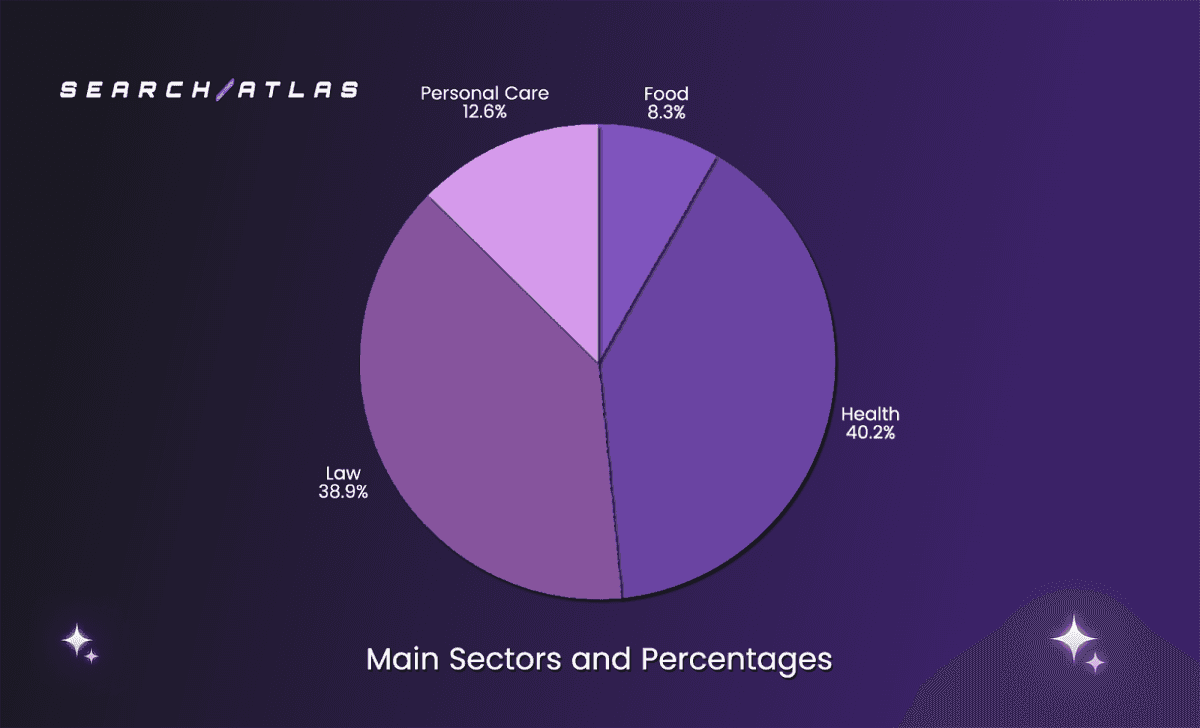
A new study by Search Atlas provides definitive quantification of the factors driving Google Business Profile rankings, revealing that proximity to the searcher accounts for approximately 48% of ranking influence across all industries. The research, which analyzed 3,269 local businesses across food, health, law, and beauty sectors, demonstrates that while proximity serves as the foundational factor, review quality and relevance become increasingly important for businesses competing for top positions in local search results.
The global analysis shows that industry type represents approximately 21% of ranking influence, while review keywords contribute 11% and the number of reviews accounts for 8%. Business name matching with search queries provides a 7% advantage, while profile and website optimization collectively contribute only 2-3% to rankings. The study utilized XGBoost regression machine learning techniques, explaining 75% of the variance in Google Business Profile rankings.
Sector-specific findings reveal significant variations in ranking factor importance. In the food industry, proximity remains dominant at 46%, but review count and rating become increasingly important for top 1-5 positions. Health sector rankings show strong dependence on category relevance (18%) alongside proximity, while legal services demonstrate the strongest proximity influence at 68%. The beauty and personal care sector shows the most dramatic shift, with reviews driving nearly half (48%) of ranking influence and proximity dropping to 21%.
The research indicates that businesses cannot alter their proximity advantage but must focus on developing comprehensive review strategies that incorporate service-specific keywords. The study found that reviews mentioning phrases like "best dentist for whitening" significantly outrank generic positive feedback. Additionally, aligning business names with keyword intent provides measurable ranking benefits, as Google's natural language processing extracts meaning from both customer reviews and business identity signals.
These findings have substantial implications for local businesses investing in digital visibility. The quantified percentages enable evidence-based strategy development rather than relying on industry assumptions. The research confirms that while technical SEO factors like complete profiles and optimized websites contribute minimally, the combination of physical location, customer feedback quality, and semantic alignment with search intent determines local search success across different industry verticals.