

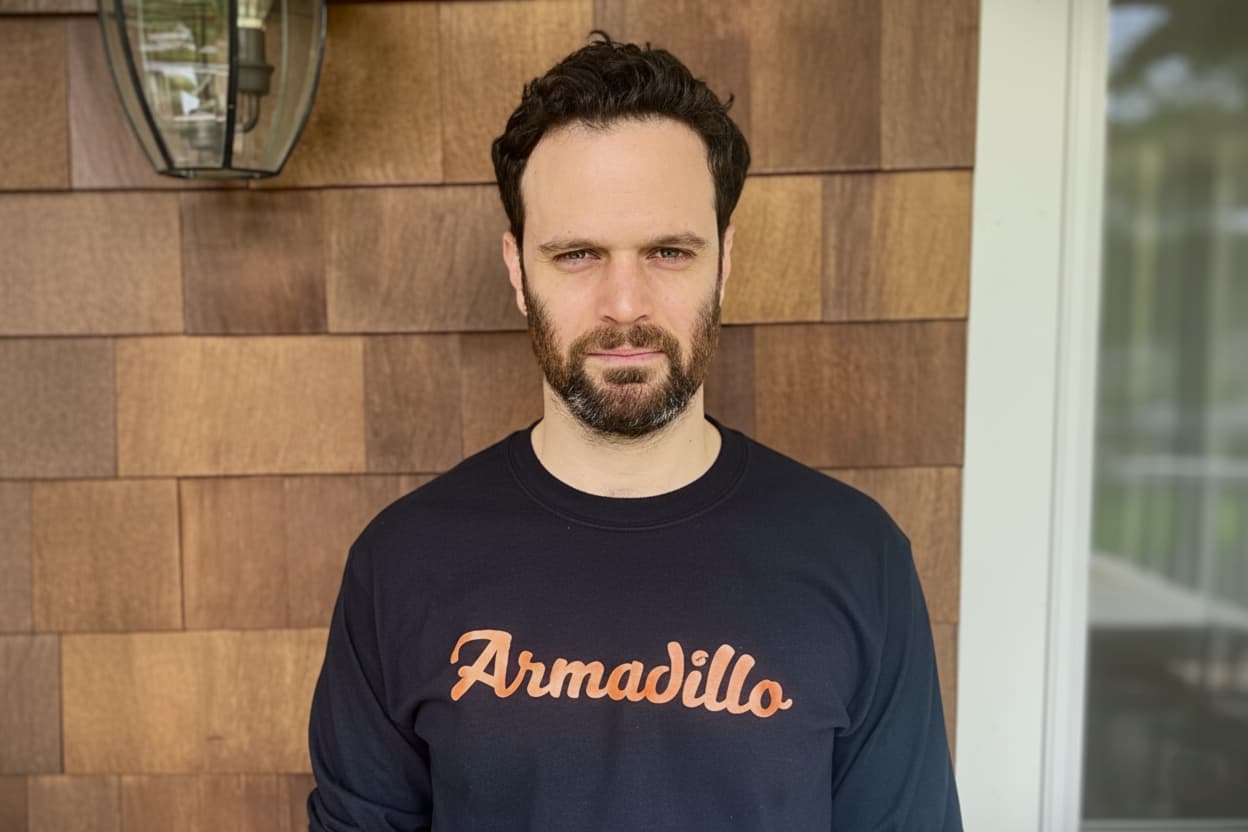
The home warranty industry confronts a fundamental reputation problem rooted in decades of prioritizing cost structures over customer experience, according to Matan Slagter, CEO and Co-Founder of Armadillo. With a background in traditional insurance at AIG, Slagter recognized that home warranty companies were primarily responsible for their own poor reputations, evident in countless negative online reviews from homeowners. While homeowners' insurance maintains over 90% attachment rates due to mortgage requirements, home warranty remains optional and distrusted, creating a market where consumer skepticism hinders adoption despite clear needs for home system protection.
Slagter applies actuarial discipline to embed customer experience directly into Armadillo's pricing model, ensuring products are priced to support both long-term profitability and high-quality service. This mathematical rigor creates capacity for genuine care rather than focusing solely on cost efficiency, with sustainability built into the company's growth strategy. By setting prices that reflect real risk and service needs, Armadillo aims to scale responsibly while maintaining strong customer relationships, addressing what Slagter identifies as the core industry failure: treating customer satisfaction as an afterthought rather than a foundational business component.
Transparency serves as a core strategy rather than just a feature, inspired by systems like Domino's Pizza's tracking interface. Slagter emphasizes that communication quality often determines homeowner satisfaction more than coverage amounts alone. Two homeowners can receive the same thousand dollars for a refrigerator replacement, yet have completely different experiences based on how clearly companies communicate, how long people wait, and whether they understand the reasoning behind decisions. This approach addresses the industry's fragmented nature, which requires integration with contractor systems and parts suppliers at https://www.armadillo.com to create seamless experiences that rebuild consumer confidence.
Armadillo's most radical departure from industry norms allows homeowners to choose between the company's vetted network or their own trusted technicians upfront—an option no other major player offers. The traditional model negotiated lower rates with technician networks to control costs but generated complaints about long wait times and unprofessional service. While some newer entrants offered only reimbursement for customer-selected contractors, Armadillo provides genuine choice from the beginning. Data shows a significant portion of claims utilize the self-service option, prompting the company to build its entire technology stack around this dual model with adaptive systems that accommodate both network and customer-preferred service providers.
As the market projects growth to $13.6 billion by 2030—roughly triple its current size—the opportunity for transformation extends beyond repair and replacement to preventive maintenance. Slagter observes that organizations across industries often grow accustomed to existing practices without questioning whether they still make sense. In a sector burdened by reputation issues, simply asking that question and being willing to change may represent the most meaningful transformation. The home warranty industry requires companies to acknowledge past failures, reimagine core assumptions, and build with both profitability and genuine value in mind as the only path back to consumer trust in an expanding market where customer experience will determine which companies capture growth versus those that perpetuate the industry's negative reputation cycle.